Fuerteventura is the archipelago’s paradise for beach lovers and adventure watersport enthusiasts. Those looking to relax and recharge will find long sandy beaches and turquoise waters that feel more like the Caribbean than a volcanic island off the coast of Africa. For the more adventurous visitors, Fuerteventura is the best island to try surfing, windsurfing or kitesurfing thanks to reliable winds and pleasant year round temperatures.
Unlike some of the other Canary Islands, Fuerteventura is not defined by leafy forests or dramatic rough volcanic scenery. Instead, its appeal lies in unspoilt beaches, wide open landscapes and dreamy sunsets reflecting off sand dunes. The island is less densely packed than others due to its large relative size to the total number of inhabitants, meaning you can easily find moments of quiet and solitude.
Are you wondering where to stay and what to do in on the island? This beginner’s guide to Fuerteventura covers everything you need to know before you go.
Things to See and Do in Fuerteventura
Explore Corralejo Natural Park
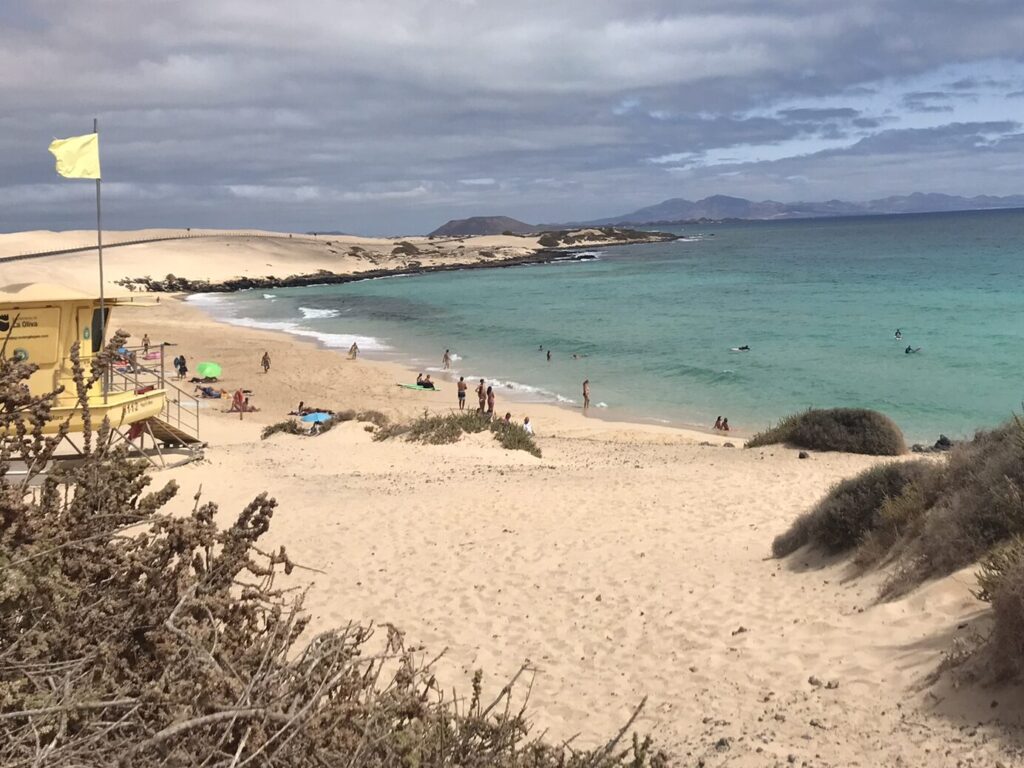
Walking through the spectacular dunes of Corralejo Natural Park feels more like the Sahara Desert than Europe. Spend time exploring the park’s sandy hills, protected beaches or visit at sunset when golden light reflecting off the dunes makes for excellent picture taking.
Try Out a New Watersport
Fuerteventura is Europe’s premier destination for wind related watersports. This is a great place to take a surf class or try your hand at kitesurf or windsurf. The island has numerous schools in Corralejo and El Cortillo in the north and Costa Calma in the south.
Relax at Risco del Paso Beach
This spectacular stretch of coastline is located in the southern part of the island. Its wide golden sands and calm waters are perfect for a day of sun bathing, swimming and relaxing beach walks.
Take a Day Trip to Lobos island
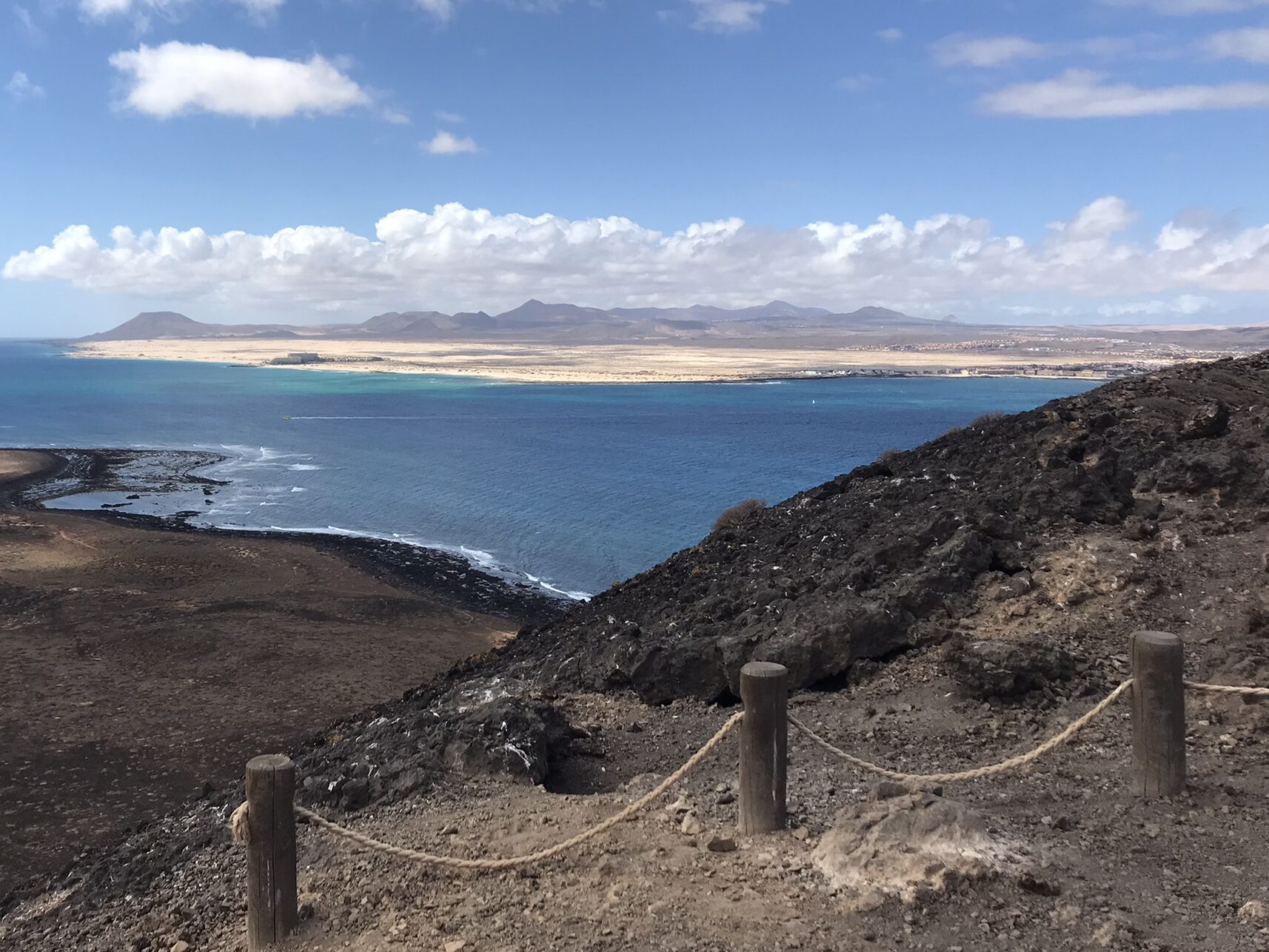
A short ferry ride away from Corralejo in the north lies Lobos Island, a protected nature reserve. Escape the crowds during your day trip and explore the island by foot; climbing up small volcanoes gives you stunning 360 degree views of Lobos and Fuerteventura. When you tire of walking, relax at Playa de la Concha before heading back to the mainland.
Wander through Betancuria
Beyond Fuerteventura’s coastline lie small villages to explore like Betancuria. Founded in 1404, the quaint former capital of Fuerteventura retains cobbled streets and many historic buildings showcasing traditional Canary architecture. It’s best to visit with a car and stay for lunch.
Where to Stay in Fuerteventura
Fuerteventura is surprisingly long and this can catch some people by surprise. Where you stay will greatly determine if you spend more time in the driver’s seat or lying on the beach, so pick wisely.
Corralejo
Corralejo is an excellent base for first-time visitors. While it boasts the highest concentration of tourist hotels, it is small enough for you to get your bearings quickly. During the day, visit any of the nearby beaches or catch the ferry over to Lobos Island. At night, choose from a range of tasty restaurants, enjoy lively entertainment or stop at one of the many bars for an evening drink. As a public transport hub, the area is a convenient base for people who decide not to rent a car.
Caleta de Fuste
A quick 10 minute drive from the airport, Caleta de Fuste attracts families and those looking for a relaxed atmosphere. Located in the center of the island it is a strategic base for exploration of both the north and south of the island.
Costa Calma
This sleepy resort area attracts people looking to spend most of their holiday relaxing on nearby beaches while still having hotels, restaurants and essential services nearby. The town is small, so it is worth renting a car to easily explore the wider southern region.
Morro Jable
Morro Jable is a more traditional town found at the southern tip of the island and centered around the spectacular Jandía Peninsula. Fill your days with long beach walks, reading books and exploring the southern peninsula at a slower pace. If you base here, traveling to the north will be over an hour and a half drive.
El Cotillo
El Cotillo is a laid back village attracting a small but growing group of independent travelers and surfers. This is not a resort town, but a more authentic community. Expect to eat at local seafood restaurants, enjoy amazing sunsets and easy access to El Cotillo beach.
How to Get Around Fuerteventura
Car Rental: It is highly recommended to rent a car, especially if you are staying outside of the main tourist center of Corralejo.
Public Transport: The public bus system connects major towns easily but service is not as frequent as on other islands. You´ll need patience and good planning to travel to beaches outside of popular resort towns.
Taxi: Great for shorter distances, or airport transfers. Distances in Fuerteventura are longer than you would expect and prices can rack up quickly.
Best Time to Visit Fuerteventura
Fuerteventura is a sunny destination throughout the year. If you are coming for watersports, make sure to review the best season for wind corresponding to your level of experience.
Spring (March – May): Great for general sightseeing as spring brings pleasant temperatures and fewer crowds.
Summer (June- September): Ideal for beaches and beginner/intermediate watersport enthusiasts. July and August are the warmest months and offer gentler waves for beginner surfers and reliable wind for kitesurfing and windsurfing.
Autumn (October – November): Warm sea temperatures continue into the early months of autumn making it an excellent season to swim or sightsee with fewer crowds.
Winter (December – February): Winter is the busiest time to visit as Northern Europeans look for sunshine. More advanced wind and wave conditions are better for experienced surfers, kitesurfers and windsurfers.
Average Daytime Temperatures
| Season | Coast | Inland |
| Spring (Mar–May) | 21–24°C (70–75°F) | 19–24°C (66–75°F) |
| Summer (Jun–Aug) | 26–29°C (79–84°F) | 28–33°C (82–91°F) |
| Autumn (Sep–Nov) | 24–28°C (75–82°F) | 24–30°C (75–86°F) |
| Winter (Dec–Feb) | 20–22°C (68–72°F) | 17–21°C (63–70°F) |
Travel Tips:
- Fuerteventura is larger than many first-time visitors expect. Driving between the north and the south can easily take over an hour.
- The island is windy. If you aren´t planning to do watersports, look for more sheltered beaches for relaxing.
- Rent a car to explore remote beaches and inland villages, Fuerteventura is so much more than its coastline!
- Shade is limited so come prepared to protect yourself from UV rays.